Conversations with a Killer Book


Conversations with a Killer – the Book – The Ted Bundy Tapes
‘He was clearly a narcissist, and he was also paranoid. So, while he didn’t trust anybody he also really enjoyed being in the limelight and thought it was a wonderful game that he was playing. Journalist Stephen. I thought if he was innocent, like he said he was, it would be a great story. It took about two weeks, however, for me to realise that Ted was as guilty as hell. Stephen G. Michaud and Hugh Aynesworth
Theodore Robert Bundy, known as ‘Ted Bundy’ also studied psychology at The University of Washington. He is categorised as one of the most infamous serial killers in the world, often set aside from other serial killers; he is considered ‘the educated serial killer’ a man whose University lecturer once said in a documentary that he saw evidence of the killer Bundy was to become, as Bundy appeared to have ‘laboriously perfected a mask he wore in social situations. In fact, Bundy was a master of compartilisation, of keeping parts of his life totally closed from the people close to him; he spent time preserving this barricade between killer and ordinary man in society. He was a skilled social chameleon, a criminal that shrewdly taught himself how to wear masks to suit wide-ranging social interactions, to present a personality that would be accepted and to keep the monster hidden. He was described as smooth, smart, capable and intelligent by educated people that met him during his life, including the tutor who taught him Law for a short time. Conversations with a killer is the true story of an intellectual battle between a serial killer and two investigative journalists, and their fight to understand the mind of a serial murderer and unravel the truth.
Bundy was the serial killer who meticulously researched forensic methods to escape detection, a man who wrote a paper about rape victims and was a suicide hotline volunteer. He was also a kleptomaniac, prolific voyeur, ferocious hunter and killer of innocent young women. With his degree in psychology, he understood the inner workings of a human being and group behaviour and used it to his advantage to commit some of the most horrific acts imaginable. These conversations taken while Bundy was in prison expose how intelligent, deliberate, prolific and truly terrifying Bundy was. Due to continuous court appeals that he made while in prison, and his inability to confess the truth to his mother, not admitting his crimes till the very last moment, he did not want to reveal his guilt on tape. In fact, Bundy did not admit guilt until the very last moments before his death.
He wanted to use us to escape the death penalty, and he probably thought he was smarter than us.’
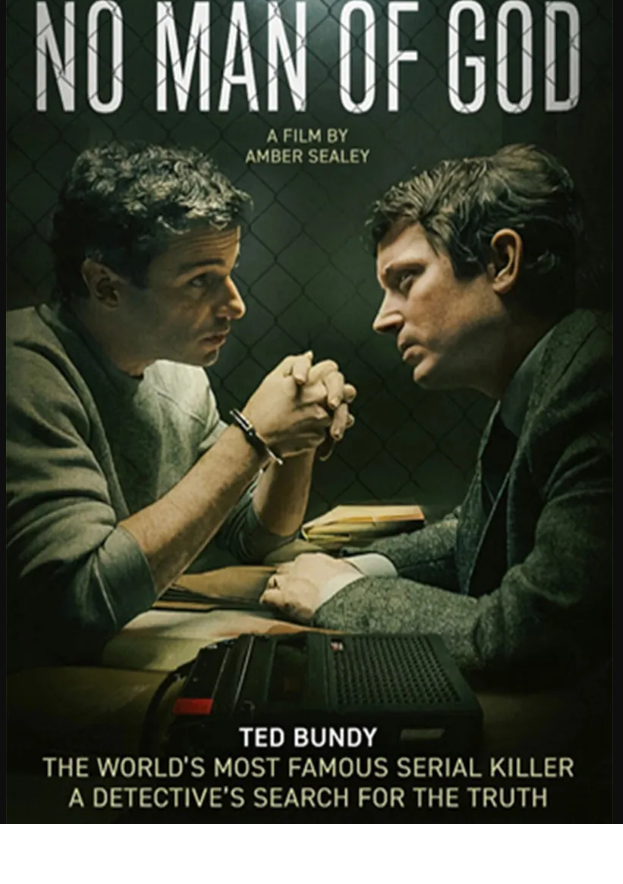
The journalists conducting these interviews soon realised that Bundy was in their minds guilty and they also understood that Bundy was not going to confess to his crimes, despite all scientific evidence demonstrating his guilt. They ingeniously decided to ask Bundy to provide a profile of a man that ‘may’ have committed these crimes, in the third person, this way they could find out more about his mind and the way he thought. The journalists wanted to understand who Bundy really was, to discuss how a serial killer behaves, thinks and acts, and how he evolved into the killer he became. They believed that somewhere inside Bundy was the need to explain.
Do you mean for me to tell you what this guy is like? Bundy asks.
Both men were investigating journalists, not clinical psychologists or forensic psychologists, nor were they experts in abnormal behaviour or FBI agents that worked in the profiling division, although Bundy was interviewed by FBI agents in prison so that they could learn from him, to prevent future killings. Unlike these transcripts, the FBI conversations could not be made available to the public. These two investigative journalists manage to persuade Bundy to theorise about the creation of a serial killer, pushing boundaries, fighting mentally with Bundy, forcing him to answer tough questions. It is conducted in a professional manner and established their skills as investigative journalists.
Hearing their idea, Bundy’s voice changes, from wariness and defensiveness; he appears to relax. Shortly, he would begin to analyse the mind of killer, theorising about the background, triggers, environment, genetics and even the effect of culture and historical timing that ‘may’ have contributed to the development of a serial murderer like himself. It would become the most unusual conversation with a serial killer possibly ever conducted.
Bundy is at times composed, almost taking the lead role of teacher, rather than prisoner sat in in prison being interviewed, theorising and discussing the mind of a predatory hunter, he was a man called a sexual degenerate, by FBI profiler Robert Keppling. At times he jokes; at others he is authoritative, narcissistic, manipulative, depressed, intellectualising, paranoid and boastful. Bundy sometimes described as a ‘showman’ yearned for some kind of fame, and he found it in the worst imaginable way possible, at the expense of innocent victims. Throughout the interviews he changes his behaviour, depending on the type of questions the investigative journalists ask. He is a man very aware of his notoriety, aware of the fact that by withholding crucial information, he can wield power. Sometimes the journalists have to act like a friend; they have to create an environment that enables Bundy talk more openly. At other times, they play good cop bad cop, in the end, exasperated it would become an intellectual battle between killer and journalist.
At times Bundy becomes angry at the way one of his court trials taking place and sounds every bit the ‘innocent man’ being maligned by officials, Bundy talks as if he truly believes he is innocent, despite all the physical evidence including blood and hair fibres and eye witness accounts, that prove he committed the murder. This bizarre manipulation of the truth voiced by Bundy is difficult to process. However, this was the man who after killing with what one agent once called ‘a sharklike ferocity, went on to defend himself in a courtroom with a thoroughness, even one judge said he would have liked to have seen Bundy work alongside him as a lawyer, but said that Bundy had, unfortunately, chosen another path. Despite his court defence, Bundy was probably incapable of holding down a professional job with great responsibility, due to his mood swings, inability to concentrate, and the hunt for victims that he was unable to stop.
Bundy cites background and early caregiving as a factor in the development of most criminals, but stresses that it would be too simplistic to be the only factor in the creation of a killer, especially a serial murderer. He describes a relatively positive background, though states it was ‘not positive enough’. In most interviews, Bundy seems to re-imagine his childhood years, portraying himself as an ordinary boy, a boy that did not experience anything too devastating in his early caregiving years. Nevertheless, evidence gathered during research and interviews by both investigative demonstrates this was far from the truth.
There is clear evidence to that Bundy’s grandfather was a violent man who was abusive to his own children. Bundy lived in his grandfather’s house as a child during the first few years of his life. His mother, Eleanor Cowell was twenty two years old when she gave birth in a home for unwed mothers. Possibly to conceal the family shame, on returning to her parents’ home, she agreed with her parents to live in an abnormal situation. Bundy was told his mother was actually his sister and that his grandmother was his mother.
It is impossible to know who long this strange deceit was acted out by the family, Bundy’s ex-girlfriend; Elizabeth Kloepfer stated that after a time, Bundy understood who his mother was in the family home. But one can only imagine what this type of abnormal upbringing had on the mind of a developing child.
In his teenage years Bundy found out that he was illegimate when he came across his birth certificate, both Liz and a childhood friend at that time, said it completely devastated Bundy. However, in these tapes Bundy denies it had any effect on him at all. He minimises these events, as if they were minor skirmishes, skating over them with ease, denying them and even re-imagining a more stable childhood.
When asked about his father in these recordings, Bundy states that there was no effect on his personality or his emotions that he never knew his biological father, or that he did not know the identity of his biological father. His mother never revealed his father’s name, and Bundy spent his life reluctant to discuss anything ‘real’ with her. Evidence shows that Bundy’s mother appeared to be a closed person, Bundy states she never talked about anything fundamental. There is also evidence to show that Bundy found it difficult to form a positive relationship with his Step-father. He did, however, admire his uncle who played the piano, and lived in a different social class, from Bundy’s parents.
Social class played a significant part in Bundy’s life, his mother years after high school recounted a story about a wealthy girl at school who won a scholarship. The family were relatively poor and Bundy grew to resent the big houses in the neighbourhood where the affluent lived. His mother also though a religious woman seemed to pass on her own resentment of the social classes and the power that the wealthy held in society. This would undoubtably lead to Bundy’s kleptomania, addictive theft that became part of his life from a student up.
It’s a telling detail that when these investigative journalists visited Bundy’s mother and told her that they believed him guilty of all crimes, playing her extracts of these conversations, she showed no real emotion, Stephen describes her jumping up after he’d spoken, clapping her hands and offering ice-cream. This bizarre exchange alerted Stephen to her ability to compartlise and completely shut off from traumatic events and her inability to show real emotion. Stephen later theorised if there could have been a genetic component that was passed down to Bundy from him.
I had this overwhelming fear of rejection that stemmed, not just from her (girlfriend from a different social class, but everything)' Bundy.
In these interviews we learn that Bundy found social integration almost impossible once he began high school, he analyses why this occurred, theorising that his upbringing and perhaps some kind of genetic programming may have been the problem. In fact his first real girlfriend, who came from a much more wealthy background, described Bundy as a weak male, trying to please too much and not asserting himself enough. Many feel that it was her very rejection that was one of the triggers that sent him on a killing spree and that led to him choosing his victims.
The Creation of a Killer
In ‘Conversations with a killer’ Bundy discusses stress and its effect on the personality of a killer over a period of time. He states that the person in question carry around damaging compulsions, which may be an anomalous pre-disposition. He positions the argument that this person, already damaged in some way, is subjected to stress from the environment, and this anxiety may create chaos in the mind. This could lead the person in question to anger and rage, when they see that they are failing in society in some way, they not be able to cope with that the way a more normal mind, a mind that does not have unnatural compulsions can. They may look for something outside of themselves to take out their anger on.
Bundy also states that alcohol taken in depressive states can also influence the mind of this killer and allow him to enter a state of mind also a heavy drinker through his life and suffered bouts of deep depressions, later a clinical psychologist said she believed that something in Bundy’s brain was causing a serious problem, she also felt he suffered from some kind of bi-polar with manic and down episodes. These days the brains of criminals have been analysed and scanned for less activity in the …….which influences empathy. Bundy believed that it took many complex factors to create a killer, that there were no easy answers and no real conclusion on what stimuli could have had the most impact, environment, upbringing, genetics, culture he believed all played a part.
Though you are aware all the time of the victims, even when he does not mention them, you understand that this person who evolved into a killing machine and destroyed the lives of many families and subjected his victims to a trauma that is hard to comprehend, to understand that a human being did this to very vulnerable innocent girls is difficult.
Some people are less psychologically able to accept failure then others. Its’ more complicated than family being the only factor. You cannot make the assertion that the family caused the aberration, other things come into play, escapist kinds of behaviour, pornography, nothing is as ever as simple as it seems on the surface. When they killed in Vietnam, the enemy was depersonalised, so they found it easy to kill. You take the individual, unique personality certain defects then you subject him to stress, that results in chaos frustration chaos, that person begins to seek out a target for his frustrations, the nature of the flaw or weakness in his personality together with other things in the environment starts the situation that we are discussing.
‘If we took this individual from birth and raised him in 18th century America or raised in Russia or Afghanistan, he may grow up normally. Why is that predisposition there in the first place. While is this propensity activated, some seem to prosper in a given soil and not in another, I’m talking about culture.’
This was to be dark journey, a journey which would leave both authors suffering depression by the end, tired of Bundy’s denials, manipulation and his instructions that his main interest was that the book they were writing sold a great number of copies. There isn’t a time during the interviews that you are not thinking of the victims. Even when he does not talk about them, you think about them.
Bundy is composed, almost taking the lead role of teacher, rather than prisoner, theorising and discussing the mind of a predatory hunter called a sexual degenerate by FBI profiler Keppling. At times he jokes; at others he is authoritative, narcissistic, manipulative, perverse, depressed and boastful. Throughout the discourses he changes his behaviour depending on the questions asked by the two journalists. He is a man very aware of his notoriety, aware of the fact that by withholding crucial information, he can wield power. Sometimes they have to act like his friend, they have to be understanding to create an environment that helps Bundy talk more openly.
At times Bundy becomes angry at the way one of his court trials taking place during the interviews and sounds every bit the ‘innocent man’ being maligned by officials, Bundy talks as if he truly believes he is innocent, despite all the physical evidence including blood and hair fibres and witness accounts, that prove he committed the murder. This bizarre manipulation of the truth voiced by Bundy is difficult to process. However, this was the man who after killing with what one agent once called ‘a sharklike ferocity, went on to defend himself in a courtroom with a thoroughness, even the judge said he would have liked to have seen Bundy work alongside him as a lawyer, but said that Bundy had, unfortunately, chosen another path. Despite his court defence, Bundy was probably incapable of holding down a professional job with great responsibility, due to his mood swings, inability to concentrate, and his hunt for victims that he seemed unable to switch off.
Bundy always had a hunger for fame and now he is famous, although for reasons that
Like me, Ted Bundy had also studied psychology, and in these conversations he analyses the profile of a serial killer, that may have committed horrific acts of murder, with a detachment, that is possibly the most chilling component to the interviews.


Comments